Digital direct-to-object printing (DTO) or direct-to-shape printing (DTS) has changed how manufacturers approach product decoration. But one limitation has consistently held businesses back:
Print distance.
Traditional UV systems require very tight spacing between the printhead and the substrate. The term for this is head gap. On an even, flat substrate surface, you can maintain a consistent and close head gap resulting in good dot control and clean prints. This works well for perfectly flatwalled cylindrical items but creates challenges when printing:
- Large handled tumblers
- Curved drinkware
- Irregular uneven surfaces
- Non-flat barware
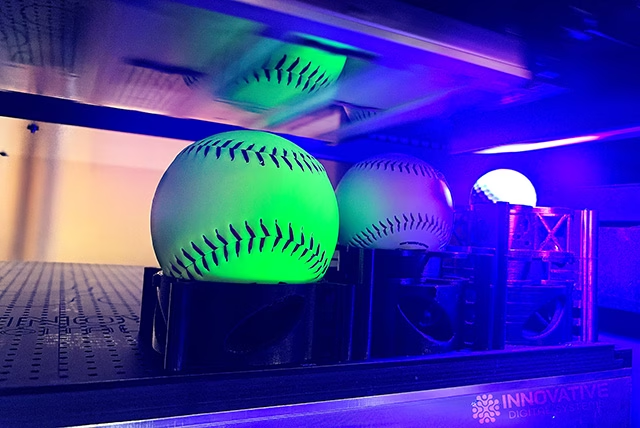
- Sporting balls (basketball, soccer, football, rugby, baseball, softball, golf ball, etc)
- Industrial components
This is where high-gap printing changes the conversation.
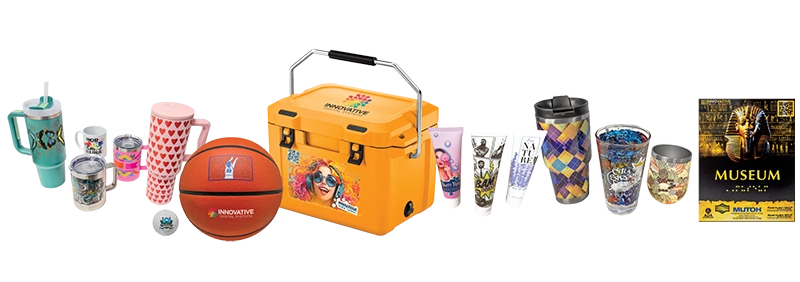
What is High-Gap Printing?
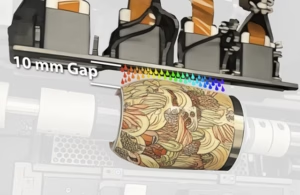 High-gap printing (also called high-throw, long throw, or high-drop printing) is a UV digital printing capability that allows ink to be accurately deposited from a greater distance between the printhead and the substrate compared to traditional systems.
Instead of requiring extremely tight tolerances, high-gap technology allows manufacturers to print across surface variations without sacrificing print quality.
In simple terms:
Traditional printing requires primarily flat geometry.
High-gap printing adapts to the more complex geometries of real-world products.
This opens the door to decorating items in new ways that were previously difficult or impossible to print.
Why Traditional UV Printing Has Limitations
Most standard rotary UV printers or flatbed UV printers operate best when the printhead is positioned extremely close to the surface. This creates challenges when dealing with:
- Tapered drinkware
- Surface irregularities
- Large diameter tumblers
- Standoffs
- Handle interference
- Mold variations or part variance
- Material inconsistencies
When the distance changes, print quality suffers.
The result?
Printers are forced to:
- Reduce artwork size
- Avoid full wraps
- Reject jobs
- Limit creativity and product value add
This directly impacts revenue potential.
How High-Gap Printing Works
High-gap printing uses advanced ink jetting control to maintain droplet accuracy when the printhead is positioned further from the substrate. This is the marriage of printhead technology, ink viscosity control, and waveforms managing printhead output.
This allows:
- Larger printable areas
- Greater surface variation tolerance
- Expanded application flexibility
- Improved production versatility
The result is not just better printing; it’s better business capability.
Key Benefits of High-Gap Printing
Expanded printable surface area
High-gap printing allows graphics to extend across more of the product surface, enabling full-height decoration and expanded wraps. This means fewer design limitations.
This is especially valuable for:
30oz tumblers
Large drinkware
Promotional goods
Industrial cylinders
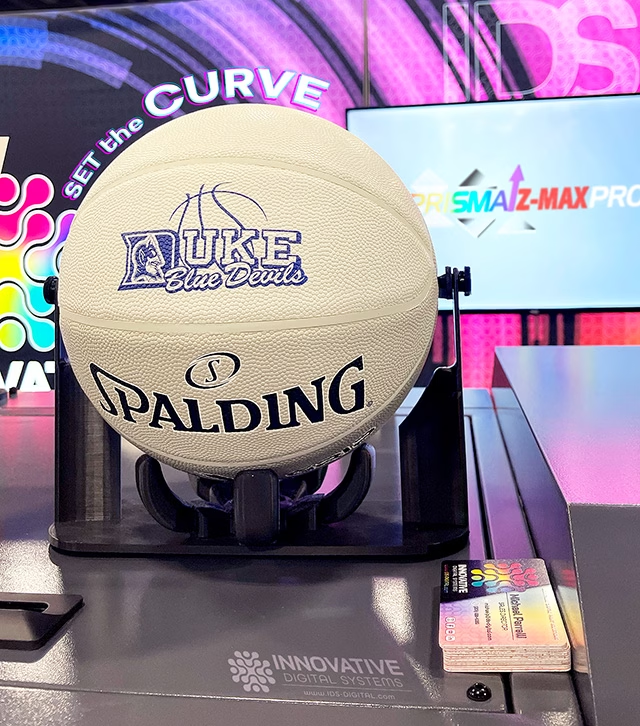
Sports balls
More printable area equals more premium product offerings.
Ability to print challenging geometries
Many real-world products are not designed with print in mind. Product designers may design for function and aesthetic instead of ideal printability, but product decorators want to add embellishments, logos, or designs, to help product resell value.
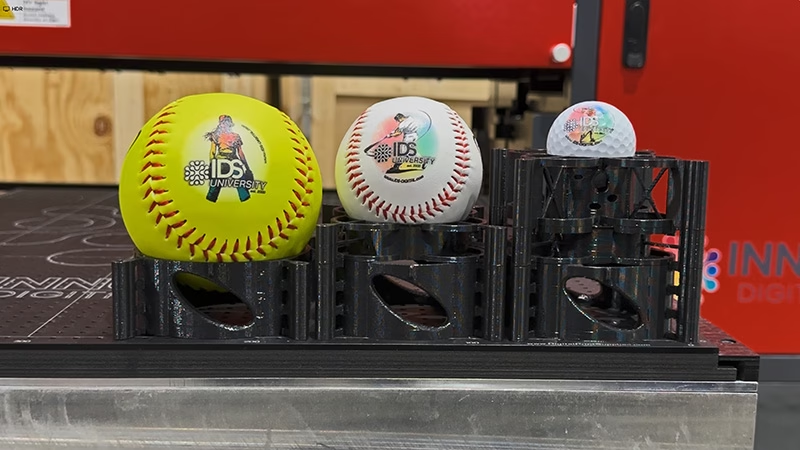
High-gap printing allows decoration across:
Tapers
Compound curves
Surface variation
Mold seams
Complex shapes
Recessed surfaces
This allows printers with high gap or high throw solutions to accept jobs competitors cannot.
Increased production opportunities
When equipment limitations disappear, businesses gain the ability to say yes more often.
This creates:
More jobs accepted
Higher average order value
More premium decoration options
Greater differentiation from their competitors
In many cases, high-gap printing pays for itself through expanded capability alone.
Reduced artwork limitations
Without high-gap capability, designers often must reduce artwork coverage to accommodate equipment constraints.
High-gap printing flips that model:
Instead of shrinking designs to fit equipment, equipment adapts to the design.
This increases customer satisfaction and perceived product value.

Market Applications Where High-Gap Printing Excels
High-gap printing is particularly valuable in industries such as:
Promotional drinkware
Corporate merchandise
Industrial part marking
Medical device decoration
Consumer packaging
Cosmetics packaging
Sports products
Why High-Gap Printing is Transforming Drinkware Decoration
 Drinkware represents one of the fastest growing direct-to-object markets.
Customers now expect:
Full wraps
Large graphics
Premium finishes
Complex designs
High-gap technology allows printers to deliver what customers are asking for without workflow changes.
This makes it one of the highest ROI upgrades available in DTO / DTS printing.
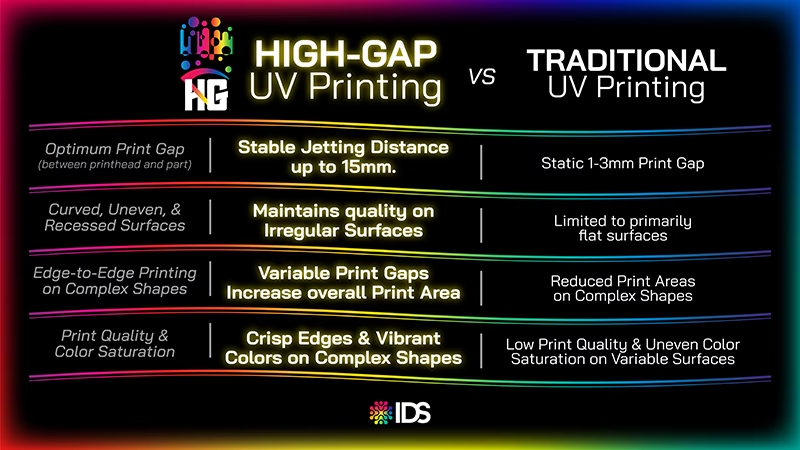
High-Gap Printing vs Traditional UV Printing
Traditional UV:
Limited print area
Requires tight tolerances
Restricting geometries
Artwork compromises
High-Gap UV:
Expanded printable areas
Handles surface variation
Prints complex shapes and contoured shapes
Supports premium decoration
The difference is expanded capability.
And capability drives revenue.
Industries Benefiting From High-Gap Printing
Promotional products
Contract decorators
Industrial manufacturers
OEM suppliers
Packaging companies
Custom product companies
Any business printing cylindrical or curved objects benefits from high-gap capability.
How to Know If Your Business Needs High-Gap Printing
If your company experiences:
Turning down complex print jobs
Artwork limitations
Customer geometry challenges
Production bottlenecks
High-gap printing may be the solution to open new markets and new possibilities.
Choosing the Right High-Gap Printing System
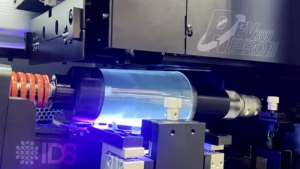
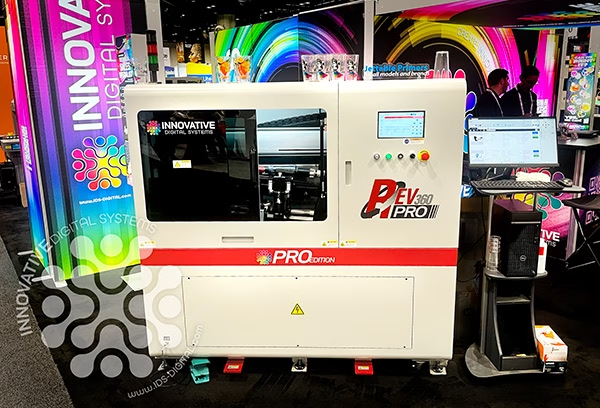
The IDS Rev360 or RevPRO 360 is the ideal solution of high gap direct-to-shape printing on bottles and assorted drinkware with complex geometries. These best-in-class industrial rotary UV printers are perfect for cylinders and conical shapes that require long throw printing for high drop applications.
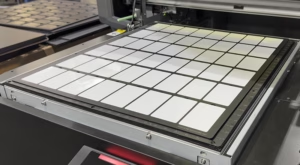
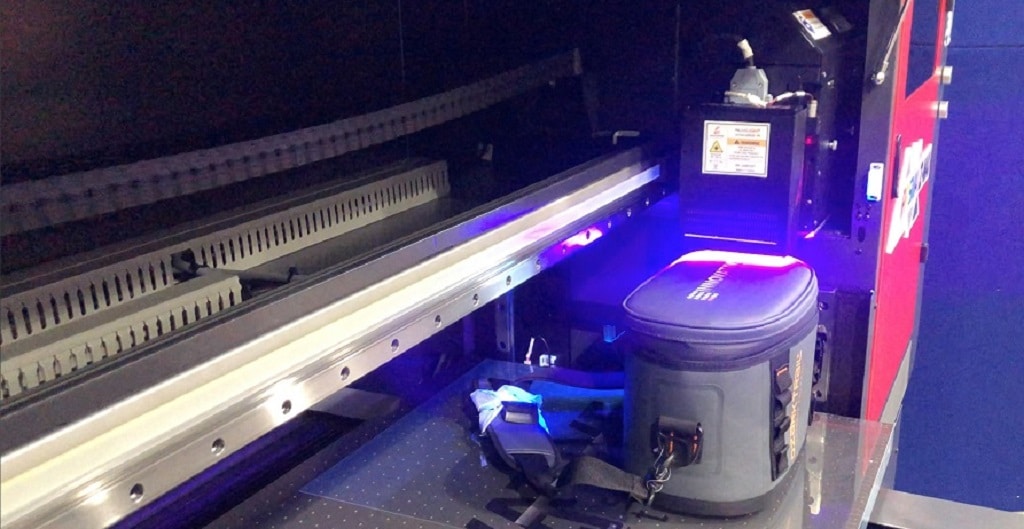
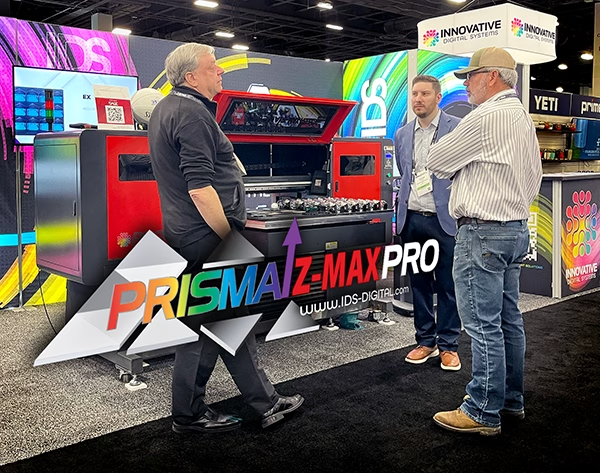
The PrismaPRO is the answer for wide format flatbed or scanning printing with a large platen for a wide range of industrial goods. Capable of high throw printing up to 15mm, the Prisma is capable of overcoming the large print gaps on balls, electrical components, cosmetics, handled drinkware, containers, and industrial packaging.
Why IDS Focuses on Application-Driven Printing Solutions
At Innovative Digital Systems (IDS), we believe equipment should enable growth—not restrict it.
Our approach focuses on:
Application requirements
Production scalability
Durability expectations
Workflow integration
Custom engineering
Premium customer support and service
High-gap printing is one example of how the right technology can expand what customers can produce without increasing operational complexity.
The Future of High-Gap Printing
As customization continues to grow, equipment flexibility will become more valuable with equipment specialization. Niche products will no longer require niche solutions. This optimizes just-in-time print production.
High-gap printing represents a shift toward adaptable manufacturing.
The companies that win will be those who can decorate more products, more consistently, with fewer limitations, fitting just-in-time manufacturing goals of reduced minimums, greater customization, and shorter turnaround times.
Final Thought
High-gap printing is not just a printing improvement.
It is a capability multiplier.
Businesses that expand what they can produce expand what they can sell.
And in digital decoration, capability is a competitive advantage.